On Thar, salt, and extraction
Empty insights into sand interpret it as empty. As if dunes don’t shift, negating borders.
By
/
Thoughts
my explorations exhale laments; staying true to their etymological need to weep. this one breathed in dust and khasta kachori. the work of chewing sweat and blood. rolling dunes, shrinking rivers, lofty hills; ‘rajasthan’ is home to life that has been and is being disappeared.
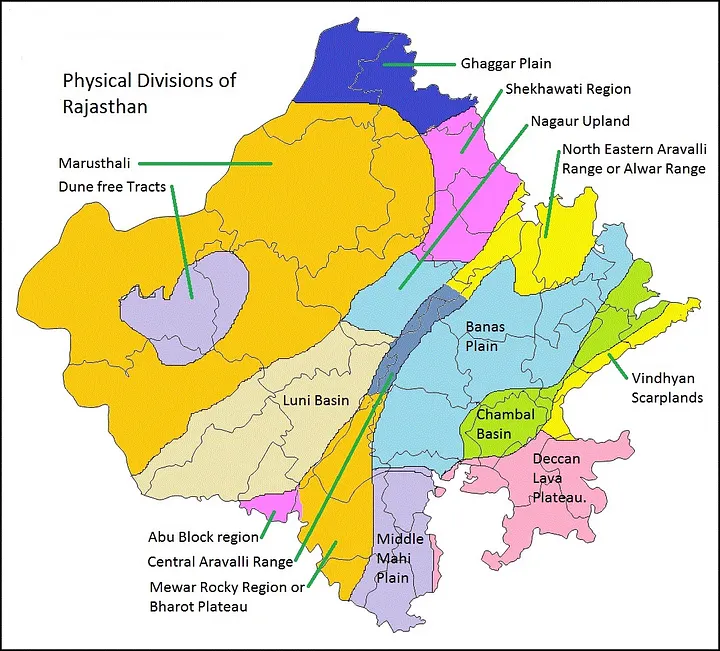
empty insights into sand interpret it as empty. as if dunes don’t shift, negating borders1. the marusthali stretches wider than my embrace. along the north-western coast, a canal was planned and scaled into the ground in 1983. Arati Kumar-Rao wrote, in one of the most searing analyses of the utter misery that development has wrought in thar I have read, how the canal (appropriately named after indira gandhi) “[had made people living in the region] dependent on the government’s inclement piped water” by leading to their khadeen and beris (pre-existing food and water sources) to go dry. the canal makes them sick. dispossession is the material. illness, the policy. production halts becoming.
in spite of publicly denouncing thar as a wasteland, the indian state has found many methods of extracting capital from there. the region known as rajasthan is forced to produce eight percent of india’s salt. caste structures who the workers “exposed to serious occupational dangers”2 at salt extraction sites are. in the title of an ICMR (Indian Council of Medical Research) report researching afflictions that accompany salt-related work, hang the words ‘prevention’ and ‘control’. of what and who? south of thar, in the rann of kutch “salt farmers suffer from skin lesions, severe eye problems (due to the intense reflections off the white salt deposits’ surfaces), and tuberculosis.”3
Kumar-Rao notes that people in the region did not have to know mosquitos prior to 1990. while today, districts in thar “[boast] the highest incidence of malaria in Rajasthan”. infrastructure murders. and no one knows that more than those who have to bury the corpses progress leaves behind. Bellamy Fitzpatrick, in “an invitation to desertion”, articulated the condition of modern subjects as being “reduced to a highly dependent relationship with the psychic and material institutions of civilization” (15). thar is being continually strangled through these very processes.
the hindi adage that ties salt with loyalty (“tunay mera namak khaya hai / you have eaten my salt”; often used to implicitly appeal to a hierarchy) exists through the indian state’s domination of thar. one must keep in mind that debt is the undercurrent of loyalty. and the state is out to collect.
Notes
1 — i have no sympathy for the indian army; an occupying and inherently violent force. fences must continue to be damaged. whether by sand or us. my anger knows no bounds when reading of the politicians visiting shahgarh bulj to ‘survey’ and ‘search’ for ‘solutions’ to the ‘problem' of ‘sand’.
2 — i do not personally agree with the rights-based approach this article takes. it also briefly mentions salt farming under chauhan rajputs and although i do not have much knowledge of this specific occupation during that period, one need only think about the deeply subjugatory caste hierarchies that would have existed- that continue to exist. who toiled for “thousands of years” and for what? the article would do well to attempt to answer the question in its own title. furthermore, a response to its comment on gandhi, please refer to my note below. the railroad built by the british that ‘connects’ sambhar lake to the city is an interesting development to look further into- especially since such transportation projects for the movement of capital are being rapidly constructed by the indian state. lastly- even though there is a conversation to be had about illegal salt production rendering workers vulnerable in different ways, i want to assert that it is not legality that is the prime problem/solution here. whether legally or illegally, sambhar lake will continue to be choked and those who are forced to work in this industry will continue to hurt.
3 — there are tensions passed over in mukherjee's piece onn agariyas, between a land claimed by the government as ‘sanctuary’ (for who and what?) and people who previously had no tensions with what the ‘sanctuary’ is claiming to protect is indicative of a larger trend of liberal green agendas as Devjibhai Dhamecha points out. the regime’s project of conservationism can be especially witnessed right now with the eviction of tribals from forests. [the nod to Congress, the ‘opposition’ party in india, towards the end of this WaPo article ignores that the state is not synonymous with freedom]
4 — it is difficult to write anything regarding salt in south asia without making space for my rejection of gandhi and the brahmanical history produced around him. i do not find a liberatory impulse in making spectacle of british laws concerning salt and natives while continually investing in caste orders that enforce misery. read dalit voices regarding the dandi march and on gandhi in general. he was and is violence.