Hindustani Music and Tawaifs: Through Four Songs
What four songs tell us about the lineages of colonial-era courtesans
By
/
Thoughts
Gauhar Jaan’s announcement of her own name remain etched into public memory. But the memory is incomplete. At the end of Maike Piya Bina, a thumri she recorded in Raag Sohini, Gauhar can be heard saying “My name is Gauhar Jaan. Yeh thumri Bhaiyya Rao Sahab Ganpat”.
Lineage isn’t an accurate word. But there is significance to the current of Hindustani music she situates herself in. Bhaiyya Ganpat was an illegitimate son born in 1852 to Jayarao Scindia and Chandrabhaga Bai, a tawaif who had become the Gwalior ruler’s concubine. She herself was an accomplished singer and dancer. Ganpatrao was introduced to and taught the intricacies of music especially dadra and khayal by Chandrabhaga. Little is known about her. Ganpatrao, on the other hand, is prolific. He became one of the most famous singers of thumri which he learnt from Bande Ali Khan (singer and beenkar of the Gwalior and Indore courts), Sadiq Ali Khan (of the Kirana gharana), and Inayat Hussain Khan (founder of the Rampur-Sahaswan gharana). He popularized the harmonium- which some would say slowly disappeared the esraj from many classical traditions.
While in Calcutta, Ganpatrao was also one of the many teachers of Gauhar Jaan. Another student of his in the port city was Jaddan Bai, a trailblazing tawaif born in Banaras to an Allahabadi courtesan family. Jaddan became an important actress, lyricist, composer, director, and producer in Bombay. She was also the mother of acclaimed star Nargis. Ganpatrao passed away and Jaddan began learning from another thumri singer, Moujuddin Khan who was a contemporary of Gauhar Jaan and himself a disciple of Ganpatrao. He was born somewhere around 1875 in a family of hereditary Dhadi musicians in Patiala. Moujuddin moved to Banaras as a child with his parents and brother. Along with them and later his sisters, this family became crucial to the city’s musical trajectory. It was Ganpatrao who persuaded Moujuddin to move to Calcutta and Gauhar Jaan who convinced him to cut records for the Gramophone Co. Ltd. in 1907 to ease his financial struggles.
This brings me to the first song from today’s times that one can trace to this particular ‘lineage’ of ustads and tawaifs. Here is a snippet from the Moujuddin Khan section of a 2006 issue of The Record News, a magazine published by Society of Indian Record Collectors based in Mumbai, Pune, Solapur, Nanded, Tuljapur, Baroda, and Amravati.
Press enter or click to view image in full size
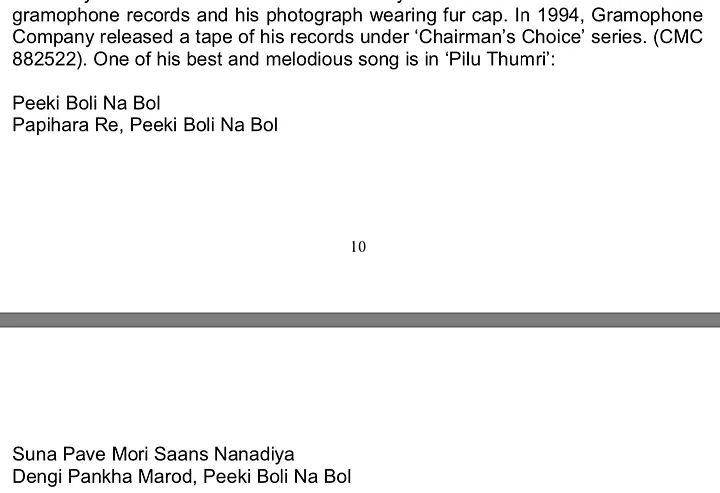
This is a 1908 recording of Moujuddin’s rendering:
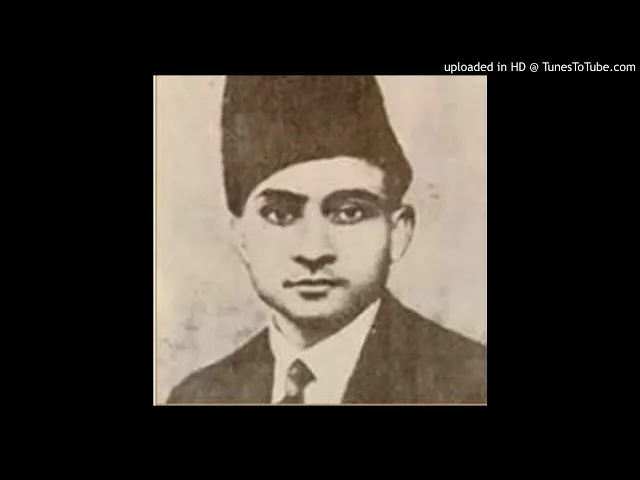
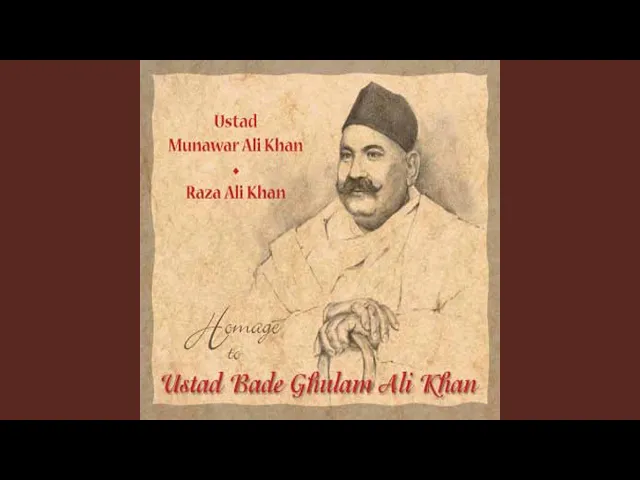
And here is Ustad Bade Ghulam Ali’s son, Munawwar Ali Khan singing Piya Ki Boli Na Bol along with his own son Raza Ali Khan in 1989:
There has also been seemingly some use of this thumri in Hindi cinema although the lyrics differ. Suraiya, who’s first appearance was as a child on-screen under the direction of Jaddan Bai in Madame Fashion (1936), sings it in 1947’s Parwana. Shamshad Begum who herself was a tawaif in Bombay kothas (at the time concentrated near Congress House especially Girgaon and Khetwadi) sung a version different from Suraiya’s for Dulari in 1949. Lata Mangeshkar too has given voice to a Boli Na Bol in 1956 for the film Aan Baan. I also found a video of Nayyara Noor singing it more recently but have found no other information about when and in what context.
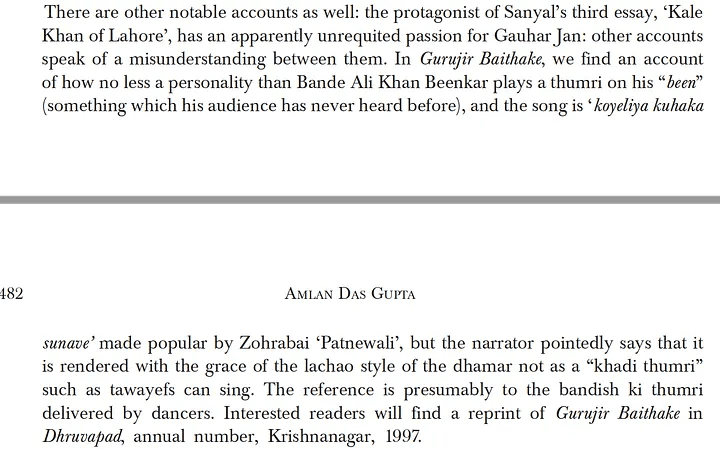
The interesting part is that thumris were historically the domain of women. Ustads of particular gharanas (especially the Agra gharana) would teach it to disciples but never sing it as part of a mehfil. Kumar Prasad Mukhopadhyay discusses this in Lost World of Hindustani Music:
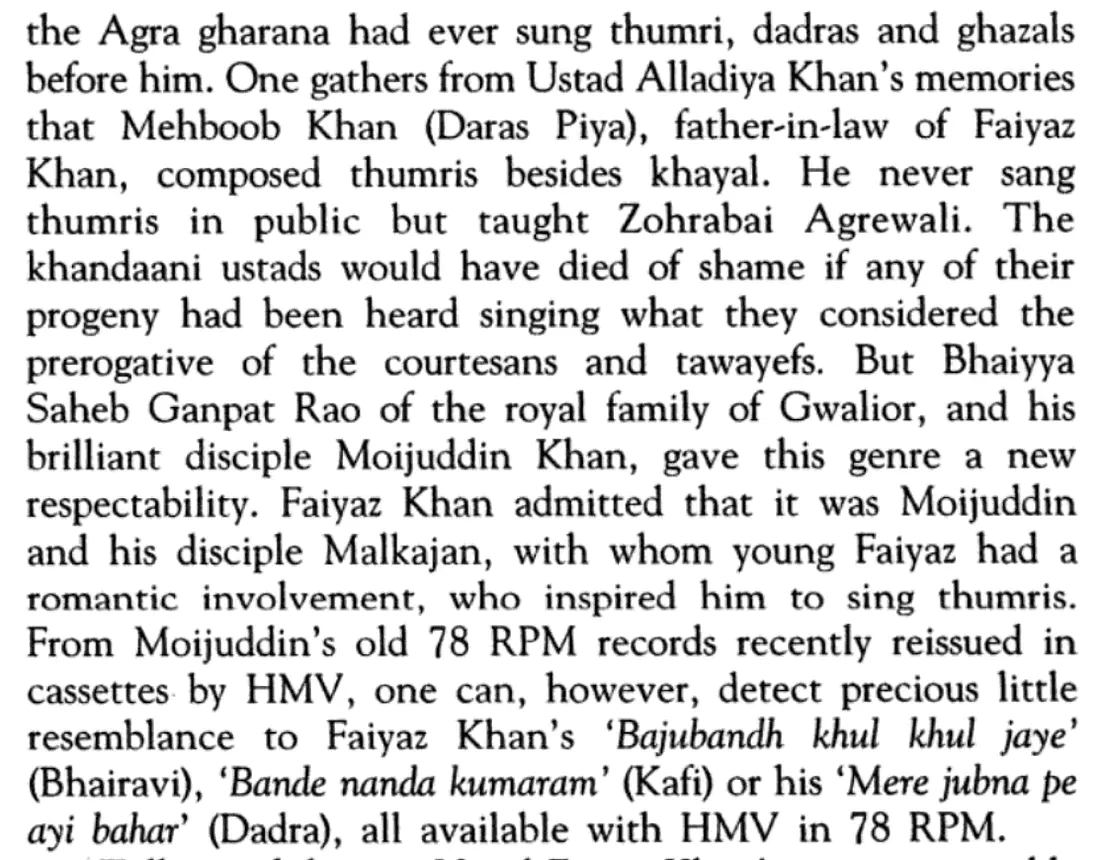
Bound up in the notion of ‘respectability’ is the intentional erasure of women. Thumri pre-dates both Moujuddin and Ganpatrao. Even though they certainly did add to its legacy, it was nautch girls and tawaifs (baijis, begums, jaans, naikins) who were experimenting, crafting, and perfecting the style. Mukhopadhyay also fails to specify that Faiyaz himself was taught by Zohra Bai Agrewali- one of the greatest thumri and khayal singers of her era who also influenced Bade Ustad Ghulam Ali Khan. Although Malka Jaan is invoked as a ‘disciple’ of and the ‘lover’ of men, it is not an exaggeration to state that Faiyaz was deeply influenced by her playful and dynamic thumrirenditions.
Of Maujuddin, Bharati Ray mentions in a footnote in Women of India: Colonial and Post-Colonial Periods that there were,
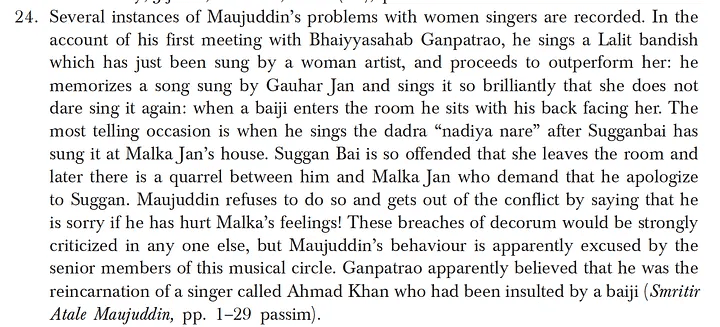
It’s not a stretch to say then that Peeki Boli Na Bol could also be traced to tawaifs given Monjuddin (as he is listed on several records) had a tendency to utilize songs performed primarily by women. There is a possibility that maybe what we preserve depends on what we pay attention to. This isn’t to say that this work is easy and quick but that who we put time into says a lot about who we think deserves that time.
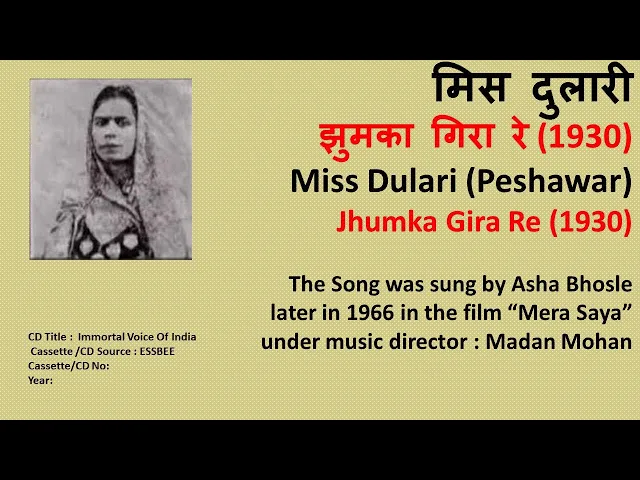
The second and third songs are Hindi film favourites. Madan Mohan’s Jhumka Gira Re in 1966 made Bareilly evergreen and Sadhana a dancer. Six years later, Inhi Logon Ne came to personify both Pakeezah and Meena Kumari. Both songs are of the kotha tradition that not only have a longer history in music but also within cinema itself. While Shamshad Begum gave voice to a version of it in 1947,
a tawaif in Peshawar- Miss Dulari left behind a recording of this song in 1932. Discogs has a short list on some of her other records here. I haven’t been able to find more biographical information on her yet.
Inhi Logon Ne’s past can be proven to be far longer. Here is Shamshad singing Inhi Logon Ne almost four decades before Lata Mangeshkar:
It is unsurprising to see Shamshad Begum be a fixture in songs such as these. Her inseparability from the world of Bombay kothas and her rapidly rising mainstream popularity made her an excellent choice for integration of ‘courtesan music’ in Hindi films. The first known recording of Inhi Logon Ne, however, is a dadra rendition by Miss Akhtari Jaan from 1918.
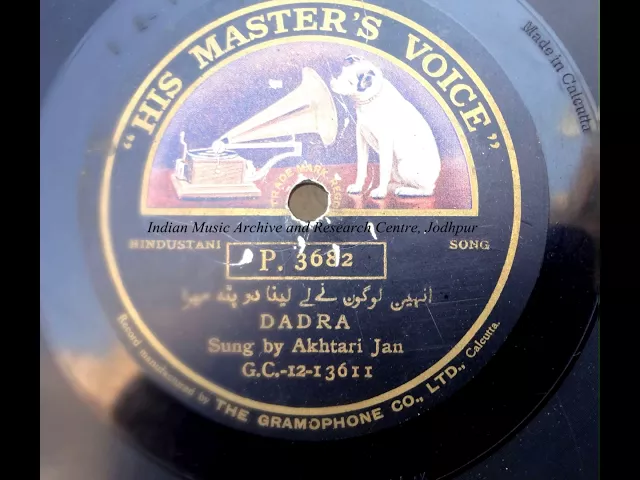
Could this be Faizabad's own Begum Akhtar? If her recorded birth date is accurate, she would have been a mere four years old. There is a chance that this Akhtari Jaan is the same as the wife of Sadat Ali Khan, a legendary sursingar player from Awadh’s Rampur who went by Chamman Sahab.

From Saubhagya Vardhana Brihaspati’s book ‘Uttara Bhāratīya saṅgīta ke āptar̥shi Ācāryya Br̥haspati eka adhyayana’
The fact that Bhaiyya Ganpatrao makes an appearance in this is not accidental. The document says that both Chamman “and his wife Akhtar Jaan” were Ganpatrao’s students. Seeing how ‘Maujuddin’ itself was inconsistent even during the time when the musician lived (Moujuddin, Mozuddin, Monjuddin were all common permutations), it wouldn’t be outlandish to say that Akhtar Jaan and Akhtari Jaan of Lucknow were the same. There are more historical references of Chamman Sahab that I have linked in the notes.
It also could be someone younger. It wasn’t rare for nautch girls (as young as fourteen and sixteen in the case of Soshi Mukhi and Fani Bala who I mentioned in my previous piece) to have their voices recorded in 1918 especially if they were part of theatre companies. Regardless, there is no definitive evidence for either theory yet. There is a chance she was neither and yet her voice means she was someone.
I have been able to string together even less for the final song. I was listening to this song by Shubha Mudgal:
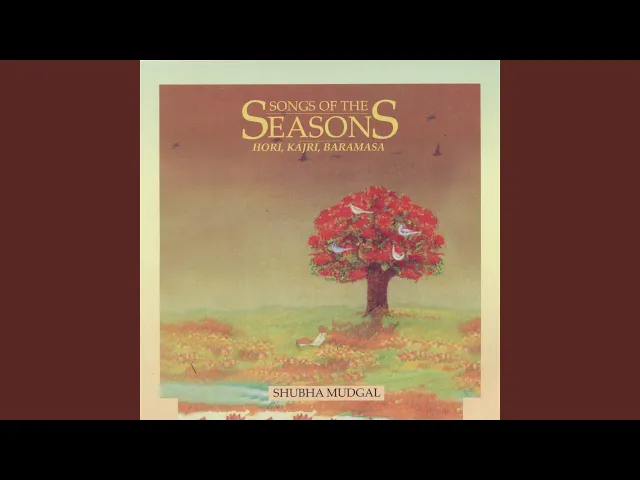
when I realized I had seen it before:
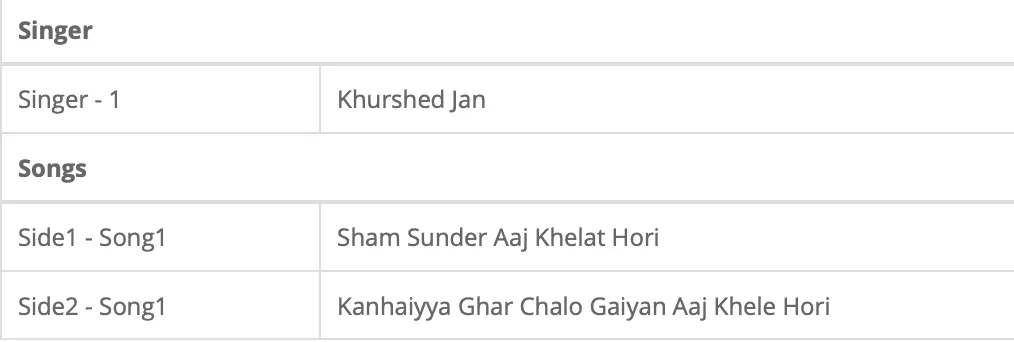
I have not been able to find much about Khurshed Jaan apart from her (if it even is in fact the same woman) name being listed in Record News’s publications. But Shubha Mudgal, on the other hand, and her ‘lineage’ is very interesting to dig into. Among other things, her mentor Naina Devi (who had been barred from singing by her husband and only returned to her passion post his passing) took her pseudonym as homage to a tawaif who performed ‘Hey Gopal, Hey Govinda Murari’ on the steps of Ahilya Bai Ghat in Banaras. Since it is Banaras, it seems that Maujuddin Khan too at some point sang this bhakti bhajan! Whether, as the article linked claims, he was the ‘first to render it peerlessly’ remains up for debate.
I often wonder whether what the obsession with naming and classifying gharanas means. For me, it to a certain extent suggests specific intellectual histories. Influences and inspirations and aspirations and collaborations. But there is a danger in solidifying them into rigid categories. There is also danger in omitting the fact there was dynamic debate between practitioners of various styles (thumri and dhrupad, for example). There is a world of names and places and teachers and students and friends and lovers and foes and patrons and detractors and antagonisms and improvisations and and and. The question is whether we are listening. And to who.
Notes:
Some interesting background on Bande Ali Khan and his lesser known but just as talented wife, Chunna
More on Chamman Sahab in Sitar and Sarod in the 18th and 19th Centuries by Ailyn Miner and Chaitanya Deva’s Intro. to Indian Music
Mojuddin Khan: Bajakhana Vol 9, Bajakhana Vol 13, Record News File
Interestingly, many sources attest to an unrequited love from Maujuddin Khan’s side for Malka Jan Agrewali who was seemingly in a relationship with Ustad Faiyaz Khan.
The disdain some Ustads had for thumri was to the extent that some would pointedly distance themselves from it by claiming it as “tawaifon ki khadi thumri” (khadi could mean in this case ‘raw’ and ‘impure’)
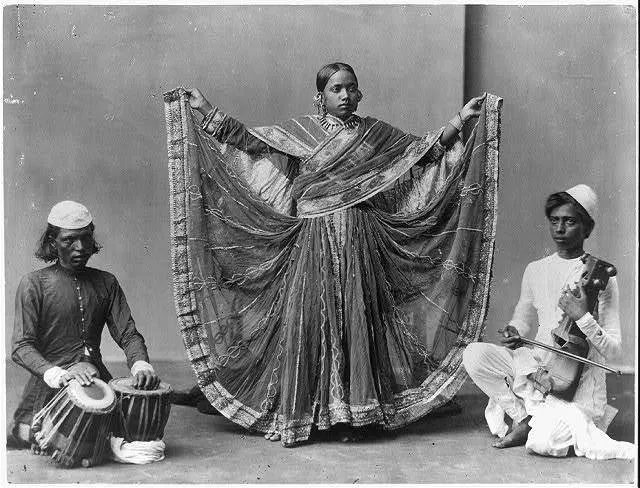
Cover image: Unnamed Nautch Girl with Unnamed Musicians (instruments are presumably tabla and esraj). Calcutta, 1900.